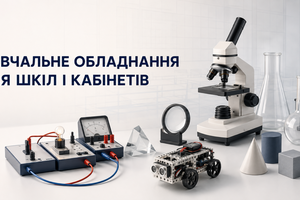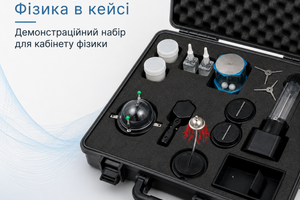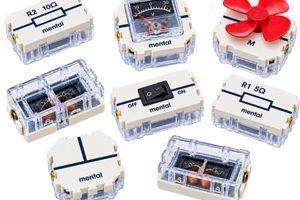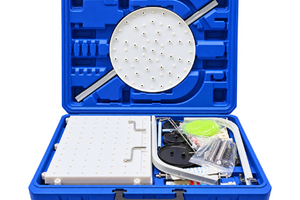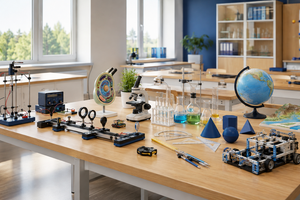
The development of modern technologies is progressing faster than ever before. We are surrounded by gadgets that change our daily lives, so it is not surprising that they also find their way into the walls of schools and kindergartens, changing modern education.
Thanks to numerous development programs, our classrooms have been equipped with multimedia equipment, electronic learning kits and often educational works that appear in the market every day. The selection is so wide that we can find a product suitable for almost any age group - from a few years of preschool to high school graduates and even students.

But is this equipment necessary in education?
No, it's not necessary, but it can be very helpful. Below I present some arguments - why it is worth it, and some inspiration - how to use robots in education?
The first, quite obvious, purpose of the robot is to teach coding and programming. Undoubtedly, these skills are part of the competencies of the future and will be needed in almost every profession that today's preschoolers choose. In this regard, we can choose a robot that works autonomously, is programmed without the use of multimedia devices - this is a good choice for preschoolers and students of grades 1-3 who are starting to discover the world of programming. By programming the robot with arrows, colors, or sounds, they learn logical thinking, seeing cause-and-effect relationships, finding and correcting errors, and algorithmic thinking.
For older students, we can offer more technologically advanced robots or learning sets that "grow" with our students. They offer continuous development, expansion of acquired knowledge and skills, from simple block programming to very advanced linear programming. Personally, I can see how different it is to learn to program when we only see the effect on the computer screen compared to the robot executing the program we wrote in real time.

Ok, but the above examples only apply to IT education, what about other industries?
In almost every field of education, we can use a robot to enrich our lessons, whether it's math, language, science or working with students with special educational needs. Children associate the robot with a toy, and working with it is a pleasure, so we do not have problems with insufficient focus or involvement of children in all the activities offered to them. Then we use the robot as our "assistant", so programming is not the goal of such classes, but only a supplement to activate the work.
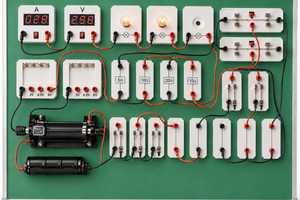
In mathematics education, we can use a robot to perform, for example, mathematical operations. It is enough to put numbers or chips on an ordinary grid, pasted with tape, and the rest to match the theme of the lesson. Robots with a drawing function can be used to teach geometry, and educational kits for all kinds of measurements and even the presentation of the laws of physics.
Works that have the function of recording and playing sounds are very useful in language education. We can use the rides to match words with pictures, combine syllables or learn spelling.
Robots or robotic learning kits that you need to assemble and program yourself are a great tool for educators, psychologists and therapists. Used to work in small groups, they help recognize and name emotions, learn to express their needs, communication, empathy, patience. Here it is worth reading the proposal prepared for students with OOP.

The use of the robot is limited only by our imagination
In each age group, we can offer activities that will be more interesting thanks to the works, and will give teachers an opportunity for interdisciplinary development of students, for example:
- learning road signs and rules - let's build a city where robots drive according to the rules - this way we combine code learning with technical and artistic activities.
- let's build a trailer for robots - which one will be able to transport the heaviest objects, and which robot will go the fastest? - we will find solutions to these problems using knowledge of mathematics and physics.
- we will create a "Green District" where robots will separate garbage - we can creatively use the objects around us for construction, and waste - for recycling.
Using a robot as your "helper" also has the advantage that we only need one or two robots for the whole group. It often happens that a school or kindergarten can afford to purchase only a few such devices, this is absolutely not an obstacle to creatively use what is available at the moment.
Finally, a robot can be just a toy in a group, but still with educational value. We can use it for any mobile games with children, teaching teamwork through different types of team competitions (Olympics, races, arcade competitions). Thanks to this, we develop large and small motor skills, eye-hand coordination, as well as control over emotions, argumentation and speech culture.
Of course, as great educators, we can achieve all of this without robots, but with robots it will be more interesting and often easier for our students and for us. A robot will be associated with fun, and we know that we learn the most through fun and positive associations.